Reading the City: A Travel Journal, Logged

Home from a trip with a notebook full of a city? Photograph the pages and Swoosh reads your handwriting back as clean, searchable text beside the original, so every place, meal and address is findable in a moment. The romance stays in the prose; you simply gain an index. Here is how a journal becomes a trip log.
Back Home, with a Notebook Full of a City
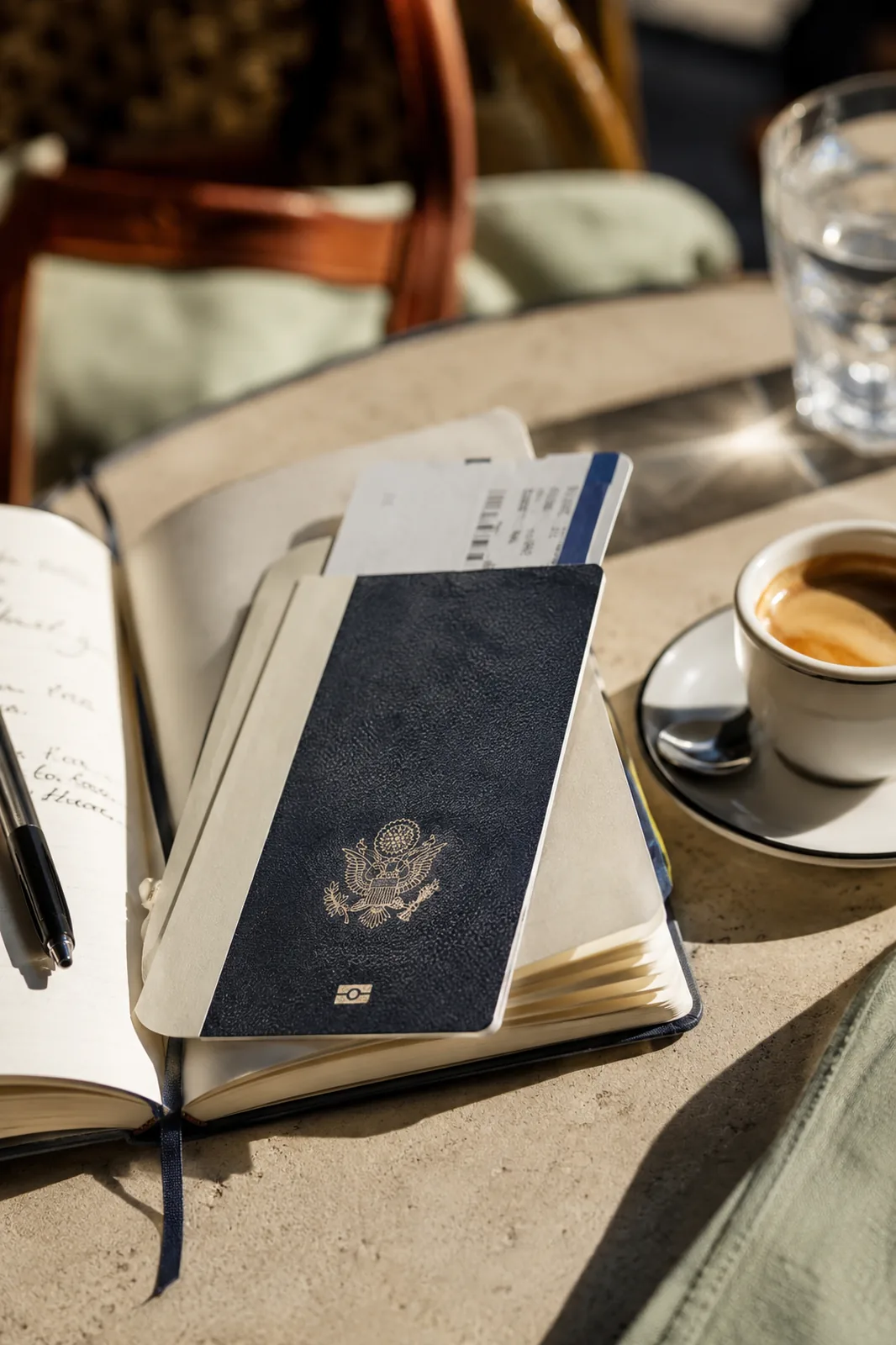
You are home. The bag is half unpacked in the hall and the tan is already fading, and on the kitchen table is the small notebook you carried everywhere for ten days. It is swollen with use. A train ticket folded into the back. The corner of a page soft where it sat in your pocket against the heat. Inside, in your own hurried hand, a whole city.
The name of the restaurant down the side street, the one with no sign, where the waiter brought you something you did not order and it was the best meal of the trip. The address of the little shop you swore you would tell your sister about. The hill you climbed at six in the morning to beat the crowds, and the exact bench you sat on at the top.
It is all in there. Which is wonderful, and slightly useless, because a notebook is a lovely thing to have written and a hopeless thing to search. In a month you will remember that the restaurant existed and not where it was. The page will still hold the answer. You will just never find it again.
Keep the Page, Gain a Log
The instinct, when you want to keep this sort of thing, is to copy it all out by hand into something tidier, and then never do it, because copying out ten days of journal is its own small holiday's worth of effort.
So do not copy it out. Photograph it.
Lay the notebook flat and open under good light, daylight from the side of a window if you can, and photograph each page on its own. Use your phone's ordinary camera rather than a scanning app; the native camera keeps the ink and the texture and the little marginal notes you made on the move. Get the messy pages too, the ones written on a moving train with the handwriting to match. Those are usually the ones with the addresses in.
Then drop the photographs onto the handwriting tool. Your scrawl comes back as clean, typed text beside the original, line for line, and you read the two together. Where a place name is genuinely unclear, a street you spelled by ear, a dish you only half caught, it is flagged rather than guessed at, so you can look at the page and decide. You stay the one who was there.
The Romance and the Index, Both
Here is the thing people worry about, and they are right to. You do not want to flatten the trip into a spreadsheet. The whole point of a travel journal is that it is not a database. It is mood and weather and the thing your friend said over the second glass of wine.
You keep all of that. The transcript is your own words, exactly as you wrote them, the run-on sentences and the bad similes and the bit where you clearly fell asleep mid-line. Nothing is summarised away. What changes is only that it is now searchable. The romance stays in the prose. The index comes for free.
So when your sister asks about that shop, you type a word and there it is, address and all, in the sentence where you first described it. When you go back to the same city in two years, you have a quietly brilliant guide written by the one person whose taste you trust completely. Yourself, the last time you were happy there.
<p class="pull">A journal is a lovely thing to have written and a hopeless thing to search. This fixes only the second half.</p>
Make It a Log You Will Actually Use
Once the pages read cleanly, export them. For a trip, a single document works beautifully: the whole journey in order, every day a heading, fully searchable. Keep the photographs of the original pages in the same folder so the notebook and the typed version travel together, the way the ticket travelled in the back of the book.
If you travel often, you build something rather good over time. A shelf of trips, each one searchable, the places and meals and addresses of years all findable in a moment. The notebooks stay on the actual shelf, soft-cornered and beloved. The words in them stop being one lost bag away from gone.
A Few Questions People Ask
Will it read writing I did on a moving train?
It is built for handwriting, including the fast and messy kind, which is exactly where ordinary scanning tools give up. It reads the run of a line rather than each letter in isolation. Where a word is genuinely unclear it flags it rather than guessing, so you can check it against the page yourself.
Will it ruin the feel of the journal?
No, because it changes nothing about the journal. The notebook is untouched and the transcript is your own words, kept whole. You simply gain a searchable copy alongside the original, rather than instead of it.
Is my journal private?
To read the pages, the image is sent to a model that does the reading, and we do not keep your images or use them to train anything. Your journal is yours. It does not become part of a dataset.
Just back, with a notebook to read? OCR your journal. Free to try.